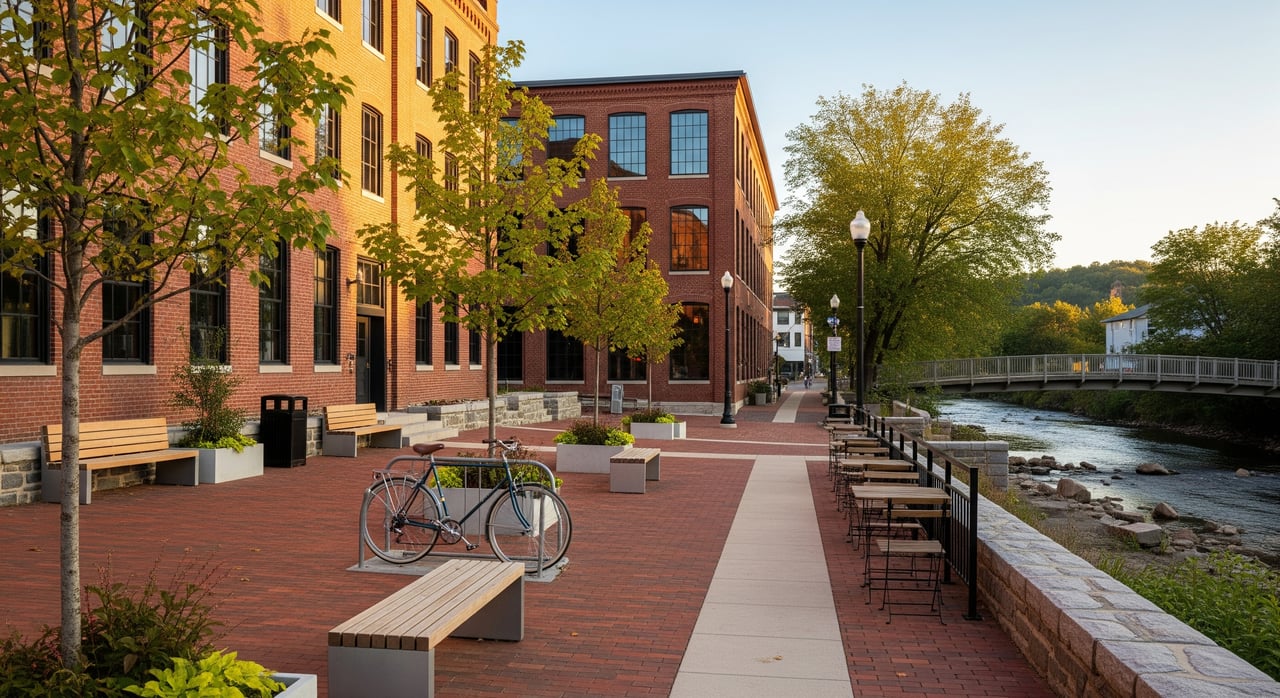
Wish you could run most errands on foot, grab dinner without hunting for parking, and bike to a neighboring town on a safe path? If you are drawn to convenience and culture, Easthampton offers a compact, creative core where car-light living is realistic. In this guide, you will see which neighborhoods support a walk-first lifestyle, what housing types fit that goal, and the tradeoffs to weigh before you buy. Let’s dive in.
Why Easthampton fits car-light living
Easthampton has a small-city feel anchored by a vibrant Main Street and the Cottage Street arts district. Historic mill buildings near the river add housing and studio space close to daily amenities. This mix puts restaurants, galleries, and services within a comfortable walk.
The Manhan Rail Trail runs through town and links to the regional trail network. If you like to bike for errands or recreation, the trail is a standout asset. Public transit via the Pioneer Valley Transit Authority (PVTA) connects Easthampton to nearby cities, though schedules can vary by route and season.
When you plan your day, a 5 to 10 minute walk is roughly 0.25 to 0.5 miles. That range covers many downtown conveniences. A 10 to 20 minute bike ride expands your options to neighboring destinations.
Most walkable neighborhoods
Downtown and Cottage Street
This is Easthampton’s cultural and dining hub. You will find the highest concentration of galleries, studios, restaurants, bars, and small shops. Sidewalks and short blocks make eating out and daily errands practical without a car.
Housing here includes mill lofts, upper-floor apartments above storefronts, small multifamily buildings, and older single-family homes that may be converted. Expect character-rich spaces and an active street life. You should review condo fees and any system upgrades when comparing units.
Mill corridor and riverfront blocks
Converted industrial buildings near downtown offer loft-style apartments and condo options. Some buildings include artist studios and commercial tenants, which add vibrancy. You can typically walk to downtown and access the Manhan Rail Trail within minutes.
Buyers should ask about elevator access, parking allocations, and how building maintenance is handled by the association. Noise levels and loading activity can vary by building and time of day.
Manhan Rail Trail and Depot area
Residential blocks near the trail give you easy bike and walk access to downtown. Small commercial pockets and neighborhood streets create a convenient base for low-car living. If you rely on a bike for errands or commuting, this area is worth a look.
Housing types range from modest single-family homes and duplexes to some newer infill. Walk and ride a potential route at different times of day to confirm comfort and lighting.
Nashawannuck Pond adjacent streets
Blocks near the pond offer quieter residential living with outdoor access close by. Depending on the exact address, downtown is a short bike ride or a medium walk. This can be a good fit if you want a calmer street feel while keeping the arts district within reach.
Expect mostly single-family homes, including postwar ranches and modest Colonials. Yard space and on-street parking are more typical here.
Peripheral corridors (North, Union, Florence Road)
These areas lean more car-dependent with larger lots and fewer daily amenities within a short walk. If you want a residential setting and do not mind biking or driving to Main Street, they can still work for a car-light lifestyle.
Housing here often includes larger single-family homes and newer subdivisions. Test your route to downtown and the trail before deciding.
Housing types that support walkability
Mill lofts and historic mill condos
These units place you close to the action with distinctive finishes. They can have limited parking and higher association fees, so match the monthly costs to your budget and car use. Ask about reserves, recent capital work, and any planned assessments.
Small multifamily options
Duplexes and three-unit buildings can offer flexibility if you plan to live in one unit and rent others. They may require active management and maintenance. Confirm local rules, building systems, and any upgrades needed for efficiency.
Low-maintenance condos and upper-floor apartments
If you prefer minimal yard work, these homes keep upkeep light and location central. Review HOA rules, pet policies, rental policies, and reserves to avoid surprises later.
Tradeoffs to consider
Parking and access
Downtown and mill buildings may have assigned or limited parking. Some rely on municipal lots or short-term curb spaces. If you will keep a car, verify your exact parking rights in writing.
Noise and activity
Living near restaurants, galleries, and event spaces adds energy to your days and nights. It can also bring late-evening noise. Visit the block during peak dining hours and weekends to set expectations.
Energy and heating
Older homes and mill buildings can be less efficient. Ask for recent utility costs, insulation improvements, and mechanical upgrades. Efficiency gains can make a big difference in annual expenses.
Commute and getting around
Bike on the Manhan Rail Trail
The trail is the standout for low-stress biking in Easthampton. It connects you to downtown and the broader regional network. If you plan to bike to a neighboring city, ride your route at commute time to confirm travel time and comfort.
PVTA bus connections
PVTA provides regional bus service to places like Northampton, Holyoke, and Amherst. Frequency and hours vary by route and season. Check your route and timetable to assess if it works for work or school schedules.
Occasional driving and parking norms
Downtown includes on-street spaces with time limits and municipal lots. If you rely on street parking for guests, confirm locations and restrictions. For winter, review any seasonal rules that affect on-street parking.
Due diligence for walk-first buyers
- Flood risk and insurance: Homes near rivers and ponds may be in a FEMA flood zone. Review flood maps and pricing for insurance before you waive contingencies.
- Zoning and future development: Ask the city’s planning department about downtown projects, street or trail improvements, and rules for mixed-use or infill.
- Historic and exterior changes: Some buildings may be subject to local historic review. Confirm the process and timelines for exterior work.
- Utilities and broadband: Verify municipal utilities, natural gas availability, and broadband options for remote work.
- Condo/HOA strength: For conversions and older associations, review master policies, reserve studies, recent capital projects, and pending assessments.
A quick buyer checklist
- Map your daily needs within a 5 and 10 minute walk radius from a short list of addresses.
- Do a morning and evening “walk test” on weekdays and weekends.
- Ride the Manhan Rail Trail to your top destinations and time the trip.
- Review PVTA routes and schedules that serve your commute or school needs.
- Confirm parking rights, guest parking options, and any time limits.
- Request utility history and ask about insulation, windows, and heating system age.
- Check FEMA flood maps for riverfront or pond-adjacent parcels.
- For condos, review rules, reserves, meeting minutes, and recent financials.
How to choose your block
Start with your daily rhythm. List the places you visit most in a week and estimate how often you will walk, bike, or take the bus. Focus your search on the Downtown and Cottage Street area if nightlife, galleries, and dining are top priorities. If you prefer a quieter street with easy bike access, look near the Manhan Rail Trail or around Nashawannuck Pond.
Next, schedule a walk tour at two times of day. Pay attention to lighting, sidewalk conditions, noise, and traffic. Then compare housing types that fit your maintenance style and budget. Mill lofts and upper-floor condos minimize yard work, while small homes near the trail balance privacy with access.
Finally, weigh tradeoffs. If you plan to keep one car, limited parking downtown may be a fair exchange for living close to everything. If you need more space and prefer calm evenings, a trail-adjacent block a bit farther out can be the sweet spot.
Ready to tour on foot?
If a car-light lifestyle is your goal, you deserve a search plan centered on real walking and biking routes, not just dots on a map. I can tailor a block-by-block tour of Easthampton’s most walkable pockets, review condo and flood due diligence, and help you compare mill lofts to trail-side homes with confidence. Reach out to Lauren Niles to plan your next steps.
FAQs
What makes downtown Easthampton walkable?
- The Main Street and Cottage Street corridor concentrates restaurants, galleries, shops, and services within short blocks, so daily errands and nights out are practical on foot.
How useful is PVTA for commuting from Easthampton?
- PVTA connects Easthampton to nearby cities, but routes and frequency vary by season and time of day. Review specific timetables to confirm commute viability.
Where are the most bike-friendly routes in Easthampton?
- The Manhan Rail Trail is the primary low-stress route for local trips and links to the regional network. Ride your route at commute time to confirm travel time.
What should I know about parking in mill conversions?
- Many mill buildings have limited or assigned parking and may rely on municipal lots nearby. Verify your deeded or assigned spaces and guest parking options.
How close is grocery shopping to downtown Easthampton?
- Downtown offers a compact mix of dining and small services, while larger grocery options often sit at the town’s edges. Check specific store locations during your search.