Craving a home with real character, not just another cookie-cutter floor plan? In Holyoke, loft-style living offers something different: soaring ceilings, oversized windows, and the kind of industrial architecture that gives your space an immediate sense of story. If you are curious about what it is actually like to live in one of Holyoke’s mill buildings, this guide will walk you through the appeal, the trade-offs, and the day-to-day details that matter most. Let’s dive in.
Why Holyoke Fits Loft Living
Holyoke’s mill buildings are not random remnants of the past. The city describes itself as a planned industrial city built around dams, canals, mills, boarding houses, and worker housing, with more than 25 paper mills once operating here. That legacy still shapes the feel of downtown today, where much of the industrial and commercial architecture remains in place.
That setting gives loft living in Holyoke a strong sense of context. You are not just moving into an open-concept home with exposed materials. You are living within a cityscape that still reflects its canal system, mill structures, and historic industrial footprint.
Holyoke Heritage State Park helps make that connection visible. Located on the former William Skinner Silk Mill site, the park still looks out toward canals and mill buildings between Dwight and Appleton streets. For many buyers and renters, that preserved backdrop is part of what makes loft-style living here feel distinctive.
What Holyoke Mill Lofts Look Like
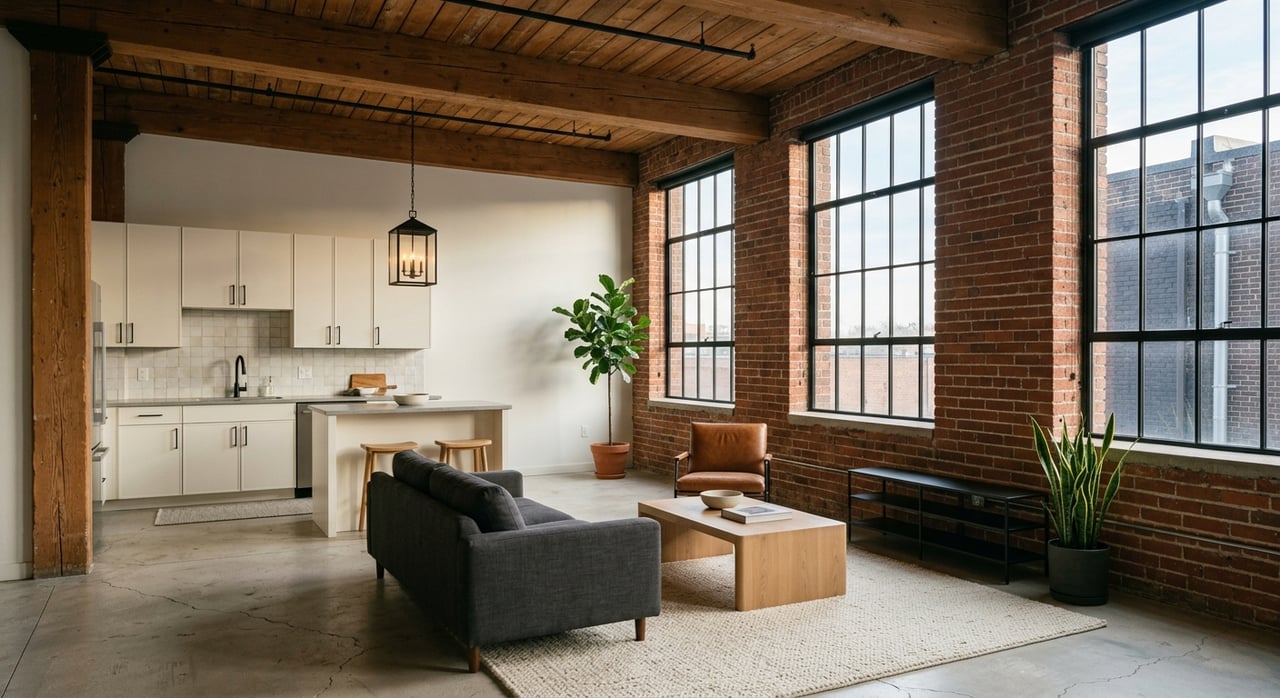
Loft-style homes in Holyoke often center on volume, light, and original industrial details. One of the clearest local examples is The Cubit at 164 Race Street, where lofts are described as ranging from 730 to 1,035 square feet with 13-foot ceilings and windows that span roughly 12 to 17 feet wide. Those features create the airy, open feeling many people picture when they think of loft living.
In that same building, residents also have individually controlled heating and cooling, in-unit laundry, personal parking, and bicycle storage. The building is also pet-friendly and smoke-free. While every property is different, this example shows that Holyoke loft living can combine historic character with practical, everyday convenience.
Another former mill listing in Holyoke highlights many of the details people often hope to find in this style of home, including 14-foot ceilings, 10-foot windows, original beams, exposed brick, original wood floors, an elevator, and gated garage parking. It is best to treat that as a single-property example, not a universal checklist for every loft in the city. Still, it reflects the design language that draws many people to converted mill spaces.
The Appeal of Industrial Character
One of the biggest draws of a mill-building loft is visual texture. Exposed brick, old beams, tall windows, and original wood floors can make a home feel layered and memorable in a way newer construction often does not. Even before you furnish the space, the architecture does a lot of the design work for you.
Natural light is another major advantage. Oversized windows can brighten the interior and make the open layout feel even larger. For buyers who want a home that feels creative, flexible, and a little more urban in spirit, that can be a compelling combination.
Holyoke’s arts and culture scene adds to that appeal. Explore Holyoke highlights venues such as ARTery, De La Luz Soundstage, and MIFA Victory Theatre, while also presenting the city as a place where arts, culture, entertainment, and community events play an active role in local life. That creative layer fits naturally with the atmosphere many people want from loft living.
How Open Loft Space Works
The beauty of a loft is also the challenge. Open layouts can feel expansive and flexible, but they usually work best when you think in zones rather than traditional rooms. Instead of relying on walls, you use furniture, rugs, lighting, and layout choices to create structure.
Design guidance for lofts often recommends using area rugs and furniture groupings to define living, dining, and work areas while keeping pathways open. A consistent color palette can also help the whole space feel intentional rather than fragmented. In a large open room, a little planning goes a long way.
Layered texture matters too. Designers often use wood, soft fabrics, oversized rugs, plants, and varied lighting to keep a loft from feeling cold or too warehouse-like. Lower-profile furniture can also help visually balance a room with very high ceilings.
Holyoke floor plans show how this can work in real life. The Cubit notes that some units include an alcove that can function as an office or media room, which is a practical example of carving out separate uses within one open footprint. If you work from home or want a dedicated reading or media area, those flexible zones can be especially valuable.
Loft Living Trade-Offs to Consider
Lofts are not the right fit for everyone, and it helps to be honest about that from the start. If you love natural light, visual openness, and adaptable space, a mill loft may feel inspiring and comfortable. If you need several enclosed rooms or strong sound separation, the same layout may feel limiting.
That trade-off is central to the loft experience. Open homes can support a flexible routine, but they do not always provide the privacy or segmentation some households prefer. Before you fall for the brick and beams, it is smart to think about how you actually live day to day.
Storage is another factor to check closely. In an open floor plan, storage often has to work harder and look better because it may also help define the room. Pieces like shelving, consoles, and wardrobes can do double duty, but the right setup depends on the specific unit.
Parking and Transit in Downtown Holyoke
Parking is one of the most important practical questions to ask when considering a mill building in downtown Holyoke. The city says it currently operates two municipal parking lots, Suffolk Street Municipal Parking and the Ernest Proulx Municipal Parking Facility. It also notes that meters citywide accept coins, debit cards, credit cards, and ParkMobile.
The city stated in 2024 that three downtown garage facilities needed attention and that broader parking management improvements were underway. That does not mean parking is unavailable, but it does mean buyers and renters should look closely at each building’s actual setup rather than assume it will be simple.
Some loft properties include on-site parking, while others may rely on shared, street-based, or nearby municipal options. The Cubit includes personal parking, and Residences on Appleton includes 109 parking spaces. Before making a move, confirm whether parking is deeded, assigned, attached to the unit, shared, or separate from the property altogether.
Transit access may be better than you expect. Current PVTA service includes downtown Holyoke stops such as High/Dwight, Maple/Suffolk, High/Appleton, Holyoke Public Library, and 429 Maple Street. For some residents, that can make a downtown loft more workable even without driving every day.
Lifestyle Around the Mill Districts
Part of the appeal of loft-style living is what happens outside your front door. Holyoke’s redevelopment materials describe the Race/Main area as being surrounded by projects and nearby activity in Open Square and the Arts & Industry District, including nightlife, shops, and restaurants. That can support a more walkable, active routine for people who want to be near downtown energy.
Explore Holyoke also frames the city around concerts, dining, shopping, art openings, and community events. Taken together, those elements help explain why some buyers are drawn to Holyoke lofts for more than just the floor plan. The neighborhood context adds to the experience.
This does not mean every building or block will feel the same. It does mean that Holyoke offers a blend of industrial history, civic identity, and cultural activity that supports the loft lifestyle in a way that feels authentic to the city.
A Note on Newer Conversions
Holyoke’s mill buildings are still being adapted for residential use, which shows that this housing style is not just a relic of the past. Residences on Appleton, for example, transformed three interconnected 120-year-old industrial buildings into 88 loft-style apartments. That project is for adults 55 and older and includes income restrictions, so it does not reflect the full local market.
Even so, it is a useful reminder that adaptive reuse remains part of Holyoke’s housing story. Amenities there include a fitness center, resident lounge, outdoor recreation area, laundry facilities, and 109 parking spaces. For buyers and renters exploring loft-style options, it is worth noting how much building amenities can vary from one conversion to another.
Is a Holyoke Loft Right for You?
A mill-building loft in Holyoke may be a strong fit if you want a home with architectural character, generous natural light, and flexible open space. It may also appeal to you if you enjoy being close to downtown culture, canal-side history, and a neighborhood with visible industrial roots. For many people, that mix is exactly the point.
At the same time, the best loft choice is usually a practical one, not just an emotional one. Ceiling height, window size, parking, storage, noise, layout, and building amenities all shape how the home will feel once the novelty wears off. The right space should support your real routine, not just photograph well.
If you are comparing Holyoke lofts or trying to decide whether this style of home fits your next move, working with someone who understands both lifestyle priorities and property details can make the process much easier. When you are ready to explore character-rich homes in Holyoke and the Pioneer Valley, schedule a personal consultation with Lauren Niles.
FAQs
What defines loft-style living in Holyoke mill buildings?
- Loft-style living in Holyoke usually refers to homes in converted industrial buildings with features like high ceilings, large windows, open layouts, and, in some cases, original materials such as brick, beams, or wood floors.
What should you ask about parking in Holyoke loft buildings?
- You should confirm whether parking is included, assigned, deeded, shared, attached to the building, or based on street or municipal options, since parking setups vary widely from property to property.
What is daily life like near downtown Holyoke lofts?
- Depending on the building location, daily life may include access to downtown stops on PVTA routes, nearby restaurants and shops, and proximity to arts and culture venues and community events.
Who is a good fit for a Holyoke mill loft?
- A Holyoke mill loft may suit you if you value natural light, flexible space, and industrial character, and if you are comfortable with a more open layout rather than multiple enclosed rooms.
How can you furnish an open loft in Holyoke?
- A practical approach is to create zones with rugs, furniture groupings, lighting, and storage pieces so your living, dining, and work areas feel defined without closing off the space.